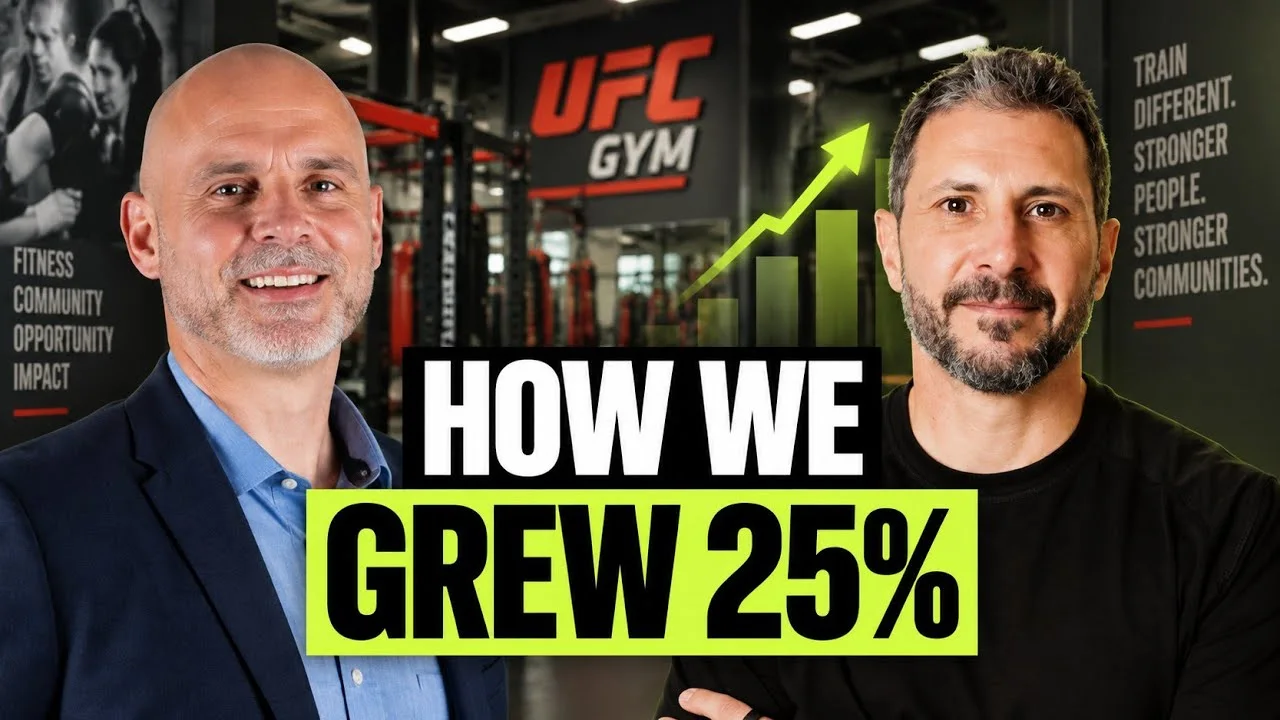
Hey friends, welcome to the Future of Fitness, a top-rated fitness and wellness industry podcast for over five years and running. I'm your host, Eric Malzone, and I have the honor of talking to entrepreneurs, innovators, and cutting-edge technology experts within the extremely fast-paced industries of fitness, wellness, and health sciences. If you like the show, we'd love it if you took three minutes of your day to leave us a nice supporter review wherever you consume your podcast. If you're interested in staying up to date with the future of fitness, go to futurofitness.co to subscribe and get weekly summaries dropped into your inbox. Now onto the show. One theme keeps coming up: the right technology can make or break your business. That's why I'm thrilled to introduce our new presenting sponsor,
Perfect Gym. Perfect Gym isn't just another gym management system. They are part of the Sport Alliance Group, Europe's leading fitness software company that has officially entered the US market. Now, I've seen this movie before, but here's the difference. They've opened up a U.S. headquarters in Boston because they understand that the American market deserves dedicated, localized support. After digging into the platform, one benefit especially stood out. They are simplifying the nightmare that keeps business owners up at night migrations. These guys were able to migrate one mega client with more than 250 locations in six different countries in just 20 days, between two payment runs, no disrupting operations, no member loss, one seamless operation that simply works. Now, if you have ever switched platforms, you know how terrifying that process can be and how truly impressive that feat is. At a high level,
here's their secret sauce. They give the power back to the operator. Instead of forcing you into their closed ecosystem, their Perfect Gym Marketplace connects with over 120 integration partners. So want to use your own app, your preferred payment processor, class pass for booking? No problem. Whether you're running a single studio or managing a multi-location enterprise, Perfect Gym was built from the ground up for multi-club operations. They have invested a ton into this platform, and now they're bringing that European engineering excellence to America. The migration experts have arrived. Check out perfectgym.com where enterprise level sophistication meets operator freedom. How we're doing?
Man, thanks for having me, or pumped to be here.
Yeah, yeah. You know, I find the interviews that are that are the most difficult to get scheduled always turn out to be the best ones. Like you're a busy guy, you got a lot going on. I've always been a fan of D1 since I kind of it kind of hit my radar like three or four years ago. And you know, I was joking with you. I oftentimes will threaten my wife that I want to open another gym. And, you know, that model would be very sp very similar to what D1 does. She doesn't like the idea, thinks we got it pretty good right now. But yeah, it's it's a pleasure. I mean, you have a really storied past. You've you live and breathe. As we were just talking about, you know, serving the athlete. And I think that's you know, having a core tenant, core pillar, a mission of what what you're doing is a very powerful thing. And you you got a great history too. I mean, you've won a national championship, right? You've you've been an athlete your whole life, you're raising athletes now. Athletics is just core to who you are. So maybe that's just a good place to start, Wills. Maybe give us a little of your background and kind of lead us up to the how D1 started.
Yeah, sure. When you start looking at your background, it forms you to who you who you're gonna become. And the and so throughout my life, I've had different mentors, different experiences that have helped me get to where I am today. But you know, I I grew up with a with a uh father who was a West Pointer, who's a military man and a lawyer, and my mom was a beauty queen and an ordained minister. So I got uh I I learned I learned a lot of scripture and I did a lot of push-ups when I was a kid. And so when I got to like middle school, kind of high school, you know, I I always kind of naturally gravitated. I was competitive, I love sports, and I just love the camaraderie of sports. And I was fortunate enough in high school to be, you know, an all-state football player, be a state championship wrestler, all-state track athlete, and never thought in a million years I'd have a chance to play a big time Division I school. Like that just wasn't in my thinking.
I was just like, I love it and I compete. And ended up at the University of Tennessee on a full ride. And I walked on campus and we had this, we had a quarterback named Peyton Manning. And I walked on campus and I was like, man, I just hope I play specialties when I'm here. There were so many good athletes around. And I was fortunate enough there to get to play with Peyton and then win a national championship. I got to be a captain of that team. And I really found my love for fitness there. So I was, you know, in high school, I worked out a lot, but it was it was very unorganized. And then when I got to college, it was extremely organized. I had a coach, I had a program, I had motivation, I had all these things. It was a whole holistic program. And I think Tennessee at that time was was ahead of kind of what was going on and in college football. I really do think that if you look at how many strength coaches came out of that that are in big time ball now. And so
because I I fell in love with the the the weight room, I always knew, like, hey, I wanted I wanted that to be part of my life. No matter what I was gonna do. So ended up going to the Broncos, blow out my knee, and I moved back home to rehab my knee to go back in the NFL. And I I wrote this business plan for this company called D1 because I had been in a couple gyms that were serving athletes. I was like, man, I really want to do that, but I wanted it a little different. The the gyms I had been in were serving like guys like me, guys playing in the NFL or trying to get in the NFL. Like I had my heart was for the middle school kid. My heart, like, because I was like, man, if I was in seventh grade and I had this, you know, like who knows? Like I didn't really start training until later in high school. And that's like, man, and once again, this is I I shared that about my parents because I had this discipline aspect of me that I love showing up at the gym early. I like following a routine. But then I also had this spiritual side where I
grew up in FCA. My mom was took me to church five times a week, you know. And I was like, man, I really want to pour back into these athletes and really go like, man, this is this is more than just you know getting bigger, faster, stronger. This is about building, you know, your mind, you know, and your heart and your soul and becoming more. And so that was really why I started it. You know, this is just to give everybody a date. This is 2002. So this is a long time ago. That's 24 years ago. When I started, yeah. Yeah, it's been a journey. That's how this all got started. It was just like, man, I I I loved it. And I did I didn't know what anything about the business practices or processes, all the things today, but it was always about serving those athletes. That first group that we had trained there, man. I was I poured my heart and soul into those athletes, and I wanted them to win more than I wanted, you know, to win. And when you do that, you know, it's
amazing how God blesses that.
When was the year? So when did you actually open your doors on the first location?
So started training athletes in 02 in a in a seal, in a field. Okay. And then my first location was the spring of 03. I opened that location. It was patio carpet turf. It was it was not what it is today. It's it was you know a couple racks that I screwed together. You know, I hung I hung some pictures on the wall, you know, wired some speakers together. Back then we were doing burnt CDs. Yeah, I would burn the CD and for the plate. The music's always been a big deal in the waiver.
So yeah, it has, it has. So walk me through that. So 2003, you opened doors on your first official facility, right? And then when did you franchise and what was like the the journey between there and franchising? Because I think there's a lot of there's a lot of people who are maybe owner operators who maybe listen to this, or a lot of them out there, I know that for sure. Single or one or two locations, right? Maybe they start to think their eyes get a little bit bigger every once in a while. Like, I should scale this out. But very, very few can, right? And very, very few do, and even fewer should, because it's a complicated process. You have to have a really solid model. I'm sure you know all these things. You have to be capitalized well. So maybe walk us through that period of time and you know, how was that how did that evolve? What were some of the struggles there? What were some of the points that you know gave you confidence to push forward? Sure.
Yeah, it happened overnight. It was just no, I'm just joking. It was it was it so I I founded the business 03. My first year, I did really well. I made more money that year than I would have if I was coaching at a college football program. I mean, I I did really well, and I went to my dad, and my dad was like, You're gonna scale this. My dad had run a he was he uh he had a big law firm in Nashville, Tennessee. And he pulled in actually a couple of experts, and one of those guys was a franchising guy, and he he gave me some great advice. He said, Never start scaling anything until you've scaled it yourself. And I was like, Okay, great, I need to do open a second location, and he said, I would challenge you to open a second and a third location in a city you can't get to the same day. And he goes, because it'll force you to
create processes to manage it from afar and not have to be the center of the business. He goes, Well, you know, like you were the you were the guy view who made it, and so people are sending your kids because of you. Now you have to go replicate you, which he goes, it you'll find out what it's all about when you do that. So I ended up opening a second and a third one. And man, there were learnings. Can I tell you? There was some lot of learnings, you know. I didn't have a point of sale system when I opened my second location. I've like, it was, you know, it was one of those things where you're just trying to figure it out and being a scrappy entrepreneur in those young days. And I I I mean, I learned a ton. And all but I will say this, it's all I did. Just so for anybody who's out there is like, hey, I want to scale my business, just get ready. Like I had a kid at that time. So my wife and I got married when we were 20 years old. We had our daughter when I was 20, and I was working literally, you know, sun up. I'm I've always
been an early riser, so sunup, sundown, or even later until 9 p.m. at night, and getting up and rewinding, doing it the next day. And so the reason D1 is not open on Sundays is because it was I I needed to save my marriage. And so I was like, I gotta be home on one day. And that's it, that's serious. It wasn't like Chick-fil-A were closed on Sundays, right? Because I like to drink on Sunday. And I was like, uh that wasn't the reason. It was the reason was like I needed it, you and my my wife, my kid. And so I opened a second, third one, scrapped, and then I was like, man, the way I'm gonna do this is I'm gonna, I'm not gonna franchise. Because I was anti-franchising. I was just back then, I was I just really didn't. I did, and I I think it was it God kind of led me to that, and it was really smart because I wasn't able to coach myself, much less coach somebody else.
So I ended up uh opening that third one, and then it we hit on that third one, and we hit because I had an amazing business partner named Peyton Manning come in with me.
Oh wow, there you go. Yeah, nice.
Peyton partnered with me on that third one, and he was just an unbelievable loyal partner. That business opened up in Knoxville, Tennessee, where he promoted it. He was at the grand opening, he was involved, and man, we had tons of athletes come in there. And so I ended up going, okay, this is it. I need a celebrity that's the marketing driver in every city. And so we ended up doing, I ended up doing 32 of those around the country, all corporate owned. So that is from just to give you time period, 03 to 2015. So 12 year span.
12 years, 32 corporate locations. That's actually a really fast pace. That's a good pace.
Yeah. And there were a couple other things I you know, I started making a lot of decisions based on real estate. My that Knoxville building, I was fortunate enough to buy it. We had a great lease on it. We bought the bought the building, and all of a sudden, when and I got it appraised, and all of a sudden I was $300,000 richer overnight. Because if you think, well, I bought it for, I think I'm I'm I'm using rough numbers, I can't remember back then, but like $500,000. I bought it for $500,000. But with my lease, I went and got it appraised, and it appraised for $800,000. All of a sudden, I'm $300,000 rich on paper. Right. And it's why how you know how real estate people make a lot of money and they'll leverage that. And so that's what I did. I leveraged that $300,000. I went and did a bunch more deals. So we ended up doing 32 of those in 2015. I had a real aha moment. I had a great mentor of mine say, Hey, Will, you got a real estate business, you got a gym business. And I didn't
tell you this part of the story, but in 2012, I launched a therapy business. He goes, and you got a physical therapy business. You got three different businesses. And he asked me, he goes, What are you the best at? And and I was like, Man, I was like, I don't know. I mean, I like them all. And they all make me money, you know. And he's like, he's like, yeah, but what are you the best at? What are you, what are you gonna be the best at? What do you want to be known for? And I went to bed that night and it just I couldn't sleep. I tossed and turned, and I woke up the next morning and I was like, I'm the gym guy. I've always been, I've always been a weight room guy. I love the gym, and I love pouring into these athletes. And when I told him that, he started laughing at me. He's like, but you're making a lot of money in the therapy business. And I was like, Yeah, but I'm the gym guy. He says, Well, great. He goes, What I would my my advice to you would be go all in on that, sell off the other assets and go all in on that. So I ended up selling 27 of my 32
buildings. I sold the therapy company in 2017, which we had already started the process of franchising D1. And I spent the better part of 2017 with my business partner, and we we remapped what D1 would look like as a franchise business. We started looking at all the decisions we were making based on real estate. Like, why are we why are we going in 18,000 square foot spaces when we really only need 4,500 square feet to serve these athletes? Like, how many racks do we actually need? Like, what's the dumbbells? Like, what, you know, why are we making some of these decisions? And when you start really looking at it through that business lens, we really broke the business down and we we we dove deep on best business practices for lead gen. We dove deep on best business practices for what the consumer wants to buy. You know, how are we going to get them in the door? How are we gonna keep them?
Best business practices on compensation models and all the different things that have gone into D1. And then we packaged all that up. Now remember, I got 16 years of learnings that we packaged up. And we started franchising in 2017. Oh, right at the end of 2017. 2018 is kind of the first time we started awarding franchises. Okay. And so you look at us today, here we are, you know, seven and a half, eight years in for to of franchising. People are like, man, you've been doing it, you know, for so long. It's like, well, we've been doing this part of it for this long.
It's so important for people to hear a story like that and see all the decisions and gates that you had to cross to get to where you are. And how many years? Right? 24, 20, yeah, 24 years. I mean, I talked to someone like you know, Rick Mayo from Ally, who's one of my favorites across the industry. And 30 years, man. He's been at this for 30 years and he finally had a huge transaction, and he's just getting started in his mind. Like 30 years later, he's just getting started. And you know, so many people get into whatever business venture they are, and they just mean you know that everything takes three times as long, right? Costs twice as much, or maybe it's five times as much and cost 10 times, whatever it is. It's no one really estimates properly what what they're doing here. And and last year, I mean, we were kind of going over some rough numbers, but you had a pre-banner year in 2025, right? Yeah, we did. Walk me through last year.
Yeah, so we ended up opening a little over 40 locations last year. We awarded 100 new low, new, new, new, new locations that are coming online. And what what I'm most proud of is you know how many athletes we're serving. We're serving over 100,000 athletes. And what and and what I love is that our our same store sales are growing like crazy. And when you're having you know almost double-digit same store sales, your units are really performing. And that means people are taking these business processes that we've created and we continue to refine. And and let me just I just want to give a qualifier always is by no means do we have everything figured out, but what I love is that these business practices they keep we keep iterating them and sharpening them and making them a little better and a little better and a little better. And man, we are really dialed in right now. And so it really makes the sit the system hum and the network is really buying into
it. Last year was was such an amazing year for us because I call it we do a theme every year for our company. So every year we have we have different types of themes. And so for me, like coming out of that year, the word I always like put on that year was to go galvanize. We galvanized together. The system really, really, really came alive and went and ran hard and served so many athletes across the country.
What are the grand totals as of we're we're in May 2026? What are you guys looking at right now?
So we we will finish these. You're talking about units. What are we talking?
Yeah, yeah, you like sold open. Give me some. Absolutely. Give me the good ones.
So like, yeah, yeah, yeah, yeah. So like this this year, we're on pace. We'll we'll we'll finish between 215, 220, somewhere in that that neighborhood is how many we will have open. So we're gonna we're set to open 56 this year units, and we're on pace with that right now. So it's it's and we we one of the things we did last year is like we're like, hey, we want everyone to hit on pre-sale. So we went and studied the best, hiring the best, and so we mean we and it is working, and it's popping. If you look at our numbers, we have records being set every month on pre-sale, which is amazing. And then, you know, some of some of the other like fun things about you know, when you look at like kind of a business from afar, you go, like, man, you can do so much. But the interesting thing is when you get to our size, it's it's really about making sure you always keep the end athlete in mind.
Because it's one thing to you know, talk sales numbers and talk how many you open, but to me, it's more about the number of athletes you're training and and then even drill down further how many athletes are reaching their goals. Because if you if your kids come to a D1 or yourself come to a D1, I want to make sure you we want to be the place where you reach your goal. You know, and so when you come in, we really want to spend a lot of time there. And so we're super excited. One of the most exciting things we've we've done is we've really spent a lot of money in tech. We built our own app. Currently, right now, we have announced that we are doing what we're calling D1 verify, where we're verifying athletes' testing scores when they come inside D1. We have announced a big partnership with on three and rivals, and then we're getting ready to do a bunch more. It is if you see behind the scenes on where we're going with it, it is so exciting. I mean, we're gonna be able
to take where a kid is in seventh grade, and much like when you go to the doctor's, I don't know, Eric, you got kids?
No, no kids.
Okay, so you might remember this with your little kid, but like when I take my kids to to the doctor, I go, you know, like, hey, how tall are they? How tall are they gonna be? What percentile are they gonna be? Right? It's so exciting as a parent. And what we're gonna be able to do at D1 is when you come in as a seventh grader and you run your test and we get your scores, we're gonna be able to load it in and tell you exactly, you know, hey, this is what you're projected to be. Wow. Which is really exciting for parents because look, I'm a my and just I try to Practice what I preach, right? Like my daughter played Division I soccer at the University of Tennessee. She went through ECNL. She went through club soccer. I spent Fourth of July in a holiday inn in the middle of nowhere, Indiana. You know, I've been that parent. And my my middle boy plays middle linebacker at Vanderbilt. So I know what it's like to get offers and recruiting and all that world. And then my my youngest right now is a high school quarterback, a junior who's getting recruited. And so
what I want to do is be a resource to these parents and to these athletes to just be straight up and go, this is where you're at. And this is where you can get to. And this is what you're projecting to get to. And oh, by the way, here's a plan. If you want this life, this is the plan to go to go do. And so that's what gets me the most excited is serving those athletes in a world-class way.
Well, you got to have a North Star, right? You got to have a North Star metric. I think of any business. And you can singularly focus on getting results. I think in any in most models within fitness, right? You can focus on getting results that the client wants, you're going to be all right. You know, it's it's a self-fulfilling prophecy at that point. And maybe walk me through the the you call them clients, members, athletes. What do you call them? We call them athletes. Yeah. Walk me through the athlete experience.
Internal, internal D1 language.
That's what I assumed. Cool. Walk me through the athlete experience. Like I, you know, I hear about you guys, I walk in or a youth athlete walks in. What how's that whole thing unfold?
Yeah, and everything starts with an assessment. We do a baseline assessment, and then we sit down and talk to you about your goals. So you would schedule an appointment, you would come in, meet with one of our coaches. Our coaches would take you through a baseline assessment. We go sit down in what we call the goal setting room, and we want to set your goal. And we go, hey, this is what you've told us you want to do. This is the time frame you want to do it. These are the things that we would recommend. And then once you sign up and you're in the system, we would either assign you to one-on-one. So you because some people's schedules they need one-on-one training with one of our expert coaches, or you would be go into semi-private, which is up four people with one coach, or you go into one of our group classes. The way we break down group classes is ages seven to 11's rookie, 12 to 14s to developmental, 15 to 18s prep, and then you have our adult athletes. Which you decide how you're going to consume, there's all
of this information that happens that we provide to an athlete outside of the gym. Because as we know, there's you know, you can only get so much work inside a D1 location. You have, you know, the other 23 hours that we got to make sure you're dialed in. I had a I had an athlete one time, I won't name him. He's a pro famous pro athlete who was trying to lose some weight, and he was coming in, he was grinding and working hard, but he just wasn't losing weight on the scale. We were measuring him, measuring him. And then finally I had a coach follow him and he was going to Christy Cree. And we c we caught him at 9 p.m. ordering a you know, 12-pack of donuts. And so you're like, come on, man. But my point being is the athlete, what we want the athlete to do is when they leave D1, we want to make sure they're getting enough information to where we can help guide that experience. And so what we've built on the back end is you're gonna get through our apps, you're gonna get
all the information, you're gonna get the checklist on what to do to be a great athlete. And then we give you content as well. We are not, we're not the experts in everything, right? So there's certain things that you know an athlete might ask or do. We go, we don't know, but here's some content on it. You made your own informed decision. And so we really just try to straight true to that mission, which is we're the place for the athlete. We want to give you as much information as possible. We test, so the way we write all our workout programming, which we have some of the best strength coaches in the country writing this workout programming, got in Cliff Marshall, who was the Indiana basketball head strength coach, got in Cliff Marshall, who was at UNLB and in the NFL, got in Jason DeMelo. They write our our programming, and this programming follows an eight-week cycle. So you're gonna have an eight-week cycle, and we're gonna define what the goal is at the end. And it might be strength, it might be speed, it couldn't just be overall health, could be body fat, whatever that might be. And we're gonna re-measure that in eight
weeks. So everybody follows an eight-week cycle that comes into D1, and you're getting the information along the way. And then we're gonna retest at the end of eight weeks. And so the goal is for you to reach your goal within that eight weeks. And we want obviously when you come in, you when you come into a D1. Have you been in a D1 yet?
Not yet. No, I don't think you guys have a lot of. Yeah.
Yeah. We got we got a couple of months in. We got Billings, we have Bozeman about to open. Okay, right on. When you come into a D1, you'll see 12 character words that are on the wall of every D1. Words like perseverance, discipline, fearless, respect. And ultimately, what we're trying to do is through that eight-week experience, is not just sharpen your body physically, but we really want to sharpen that mind. We want you to go, hey man, I love being disciplined. You know, I love persevering through a squat day. You know, I love, you know, this, these are character traits that we're trying to embody because to go back to the beginning of the story, is that that's what changed my life is the weight room really changed my character even more. But so than my physical.
Yeah. Yeah, mine too. It really did. Like, even just uh, you know, the the high school experience I had with Claire Rogers, rest in peace. He probably one of the winniest coaches in California history at Bellerman. And it was water polling swimming were his sports, and he just racked up titles, right? But the weight room was where the real magic had. It was horrible. Like it was scary, it was hard. People vomited often. And but the character that came out of that, I'm like, I think that's why I got into CrossFit eventually. I'm like, this kind of feels like that same kind of feeling again. And but it was, it was very much like the ability you learn at those critical ages, right? Of like, okay, I'm not gonna break, right? Like I can, I can go farther. Like this little bit of discomfort is just a signal. It's not the end all be all. I can keep going. And that that translates to so many different parts of your life, entrepreneurship for sure. I mean, there's a reason why so many athletes get into entrepreneurship because you have to have self-discipline, right? You have to be comfortable with being uncomfortable. So I think it's, you know, it's it's spot on, man.
And one of the things I'm curious about is that the the model must have some challenges, and maybe it's not, maybe it's not a challenge, but the seasonality of it all, right? Because these athletes are gonna probably come in you for the off season, but they get into the regular season, they just don't have time. And does that kind of balance out over the year because you have multiple sports going on? Or is that like how yeah, how do you address that specific challenge in the business model? Yeah, you you plan.
So I mean, I I had that my first first year of business. How was the language? Where are all the athletes? It's full. I was like, well, I'm training all the football players, they're in football season, yeah. And so we have a couple different things that we do is one, our we have we build out an extremely robust calendar year for training. And so we know when to market to athletes, when to get athletes in, and you know, when they're gonna go in season. The other thing we do is we provide resources in season and educate. Okay. Because the athletes that get ahead year after year are the ones that train in season. Yeah, the athletes that, hey, I'm gonna go in season, I'm not gonna train at all. They usually will dig, you know, they'll they'll go backwards, right? A little bit, and then they got to catch up when they come back in the off-season. So we really want to educate our athletes to stay year-round, but for sure, you got to make sure you plan for those in-season, all-seasons programs. But I but
at the end of the day, people come and I talk about our content and talk about all that. What was the coach you just mentioned? Larry Rogers. Larry. My dream. When I'm when I'm 24 years in, but maybe 24 more years in, maybe I'll reach this. But my dream is for when athletes across the country, they go, you know what? When I go to D1, it's because of Larry. Like I love the the fact that what coaches do in our lives. Because they give you more than just the information. They also are massive servant leaders because most of the time coaches know how to do it better than the athlete knows how to do it, right? They they most of the time coaches have all the information and they have the answers, and they're passing that information on and they're they're they're being patient with the next person to get there. And so I just
I tend to find I want to I want to reshape coaching for the next generations because I think it can be inspiring and motivating. It can be where that coach can make a lot of money and do really well and have a great lifestyle because to me, they're serving such a good need for our community.
You know, thank you. That was a beautiful setup for the next question I had for you is that I I get mixed signals from people across the industry when looking for really good coaches, right? Like the talent pool. You know, I I talked to a coach yesterday I've known for many years, and and you know, there's a mass consolidation of people aren't spending as much money on coaching anymore, specifically in the cycling world. So, you know, fewer coaches are are kind of getting more clients. And so it's it's it's a weird state, and I'm sure AI drives a lot of it, right? You can have AI write a program, but they can't coach. So, I mean, how is it right now with the state of coaching? Like, is it hard to find talent? Is there a lot of desire to be a coach in the youth, you know, in the youth space? Like, are people coming up and getting multiple certifications and like this is the career I want? Or is it some of it drifting off and kind of like the the side hustle world?
Yeah, yeah. I think I think people it's weeding out the pretenders.
Okay.
And what I what I've seen is that the people that really want to be in the space for the right reasons, man, they're easier to find because they're here for the right reasons, and it's kind of weeds out the people that are like not really in it. You know, I've I once again I've seen it, I've seen I've seen people come in and out of this space for so long. And anytime anybody comes in and goes, hey, look, we'll see you in a couple years. Hopefully you're here. You know what I mean? Like, I'll be I'll be here. And so I think it's a coaching is a little bit the same way, which like it's got to get in your blood. But look, there is a practicality of making sure you have a great business model set up to where coaches can win and make good money. Yes. They need to have a place where they can make good money, they can have a lifestyle. We're getting coaches now that are going, hey, I don't want to be,
you know, working for what a football team or you know, whatever sport, because they're like, if that my head football coach gets fired, I get I have to move my family. So like I want to play roots in, I want to raise a family here. And so they're coming to us, which is we love that. And so we want people for the right reasons, we want people that like are the right people. And at the end of the day, co great coaches want to be on a great mission. And when you're trying to influence generations of coaching, we want we're we're trying to we're on a mission to try to put inspiring and motivating coaching in every every key unity in the country. And when you're on that mission, people get fired up. They go, hey, I want to be a part of something like that. And so that's what we're we're looking for. If you're if you just want to get a paycheck, we don't want you. You know, if you're just somebody who just wants to show up and have a
free place to work out to train a couple of clients, we're not in the spot for it. We're looking for people that are really trying to reshape these communities.
Well, it's it's a really interesting point. It's like, you know, the the finances have to be there, right? Otherwise, it's unsustainable. And I think for most, a lot of people historically in the industry, they're like, they're a good coach, you know, strength and conditioning coach, and they have a couple options. They can go, you know, the traditional collegiate route, right? Hopefully up to pro. But there's a lot of there's there's a lot of things that aren't so great about that model. Like you just mentioned, I've heard multiple other things that we don't need to get into, but like, or or you go coach, but then you kind of get you work, start working in a gym, and maybe you're not making a lot of money. So you decide, well, I got to open my own business. Then you open your business and you realize I don't I barely have any time for coaching anymore. Like I'm just running the business. And that that's like such a that that tail is as old as time within our industry, is like, well, this is the next level up. I have to open a facility, but now I'm not doing anything that I love anymore. So how do you how do you create that path? Is it is it a path towards being a franchise, or is it do you have like just the model is in there so they can make a great living, retirement, in health insurance,
all that stuff within D1 as a coach?
Oh, well, well, number one is there's one of the things that I subscribe to transparency. I try to be extremely transparent about the numbers, about where we're at, because that's the way I was. It was like when a coach doesn't understand, they just see a bunch of clients and they're like, Why are you paying me more? Then there becomes a this unsaid friction. Yes. And I just think that's the wrong way to do it. Right. Yes. So we do a scorecard. Every one of our facilities does a weekly level 10 meeting for those EOS people out there. We follow EOS at the unit level. Our coaches attend it, our coaches know the scorecard, they know exactly what the revenue is, they know how many clients they have, they know when they will be getting bumps and when they won't. Every coach gets a 90-day review. And that radical transparency does two things. Is one, it goes, hey, are you gonna help
this out? You can help build this business. Or are you just if you're just gonna float along, you're not gonna last here. We we typically find with our coaches if you make it a year, you're gonna stay five. But that first year we churn you. There's a lot of churn. Because people just can't cut it. They say they can, but then they can't. And so when I when I see somebody who's a rock star after 90 days, I go, okay, let's see if you can do another 90. Let's see if you can do it six more, right? Because if you get past that year, it's like, okay, do you really you really understand this? And you know, I don't know if this is helpful to a listener or not. But like if I was if I was out there and I was maybe getting my own my own gym started and I I was listening to your podcast, which thank you for serving the all those entrepreneurs out there. I'd I would want to hear that, man. It is it's a it's a journey. And your coaches need to understand, like, hey, I'm signing up
for a journey. Because ultimately, as a business owner, it is lonely, it's tiring. It's but the rewards are so rich on the back end, but it's just there's no shortcuts. Yeah, there's not I have I have an owner who has just crushed it, like whatever math you would think for a uh a small, you know, a D1, like take our take our FDD numbers, and they he's blowing it out of the water. And it was like, man, you did that year one, like can you do it year two? And he's like, Oh, I want to open my second one. I was like, that's awesome. Let's go. We can go open a single one, but can you do that in year two and grow it? And then can you do that in the same one? And my point being is it's like this process of thinking is just always gonna be like plug in the plug in the machine, it's just gonna, you know, this is not this is not work that's like you sit behind a desk and you just don't talk to people, you don't work the business. You gotta work the business.
Yeah, I've been looking for shortcuts for 18 years and I haven't found one yet, you know, except good talent. Yeah, you know, great talent can help you move faster for sure. I want to take kind of like a zoom out on the macro level about youth sports. There's, you know, from the finance MA, there's a lot of activity going on right now. Like it's the this industry is is hot, right? Or it's maturing. I'm not too sure what it is. So when you kind of look at and even, you know, there was an article that you guys are up for sale, we don't have to talk about unless you want to, but that's out there publicly. So you guys are open to conversations there. But yeah, there's a lot of there's a lot of activity going on right now. You know, what what's your take on that? Like, why do you think that's happening now? Do you think it's just the beginning? Do you think it's a maturation? Like, we're what phase do you think you're in? If this is a football game, what quarter are we in?
Yeah, that's just we're in the first. It's early. I mean, I look the the industry, I think and uh I might misquote the stat, but I you know, the the addressable market for like use, for space and and strength and conditioning, and I'm I'm gonna include our athlete adult fitnesses. Like it's like a hundred and fifteen billion right now. Which sounds like a big number and whatever. These big these markets, I'm more of a practical person. I hear that number and I go, okay, there's so much money being poured in to the space. I like to just watch buyer behavior. That's what kind of is like my kind of litmus test. And so if you look at if you look at how much people were spending on training back in 2003, and how much people are spending here some 20 something years later, it is it is
10x. And we're and we're not it is 10x with their willing to spend. Here's the crazier thing is that when I first started, for fit for 15 years, I didn't have I barely had kids doing private training because parents were like, hey, I don't want to spend private training money on my kid, I spend it on myself, I'll put them in a group, whatever. Now we have so much private training for athletes. Like it is, it's a massive part of our business because that's what the consumer wants. My point being with all that is saying NIL has shifted things to where I think people are seeing money at the money at the end of the you know, rainbow of the kid's spectrum. Like, hey, at 18 years old, they guys need to make real money. Yeah, kids are getting paid in high school now, making real money. So there's all this peer pressure of
like, hey, I gotta keep up, I gotta do that. It's not it's sometimes it's not just to make money, it's just to get the spot because it's getting more competitive. And I think if you just look at pure show college sports, and all I mean, it is way up. And so I just think we're in that, we're in the early innings because, and I'm I'm looking at my kids and going, man, I've done really well, God's blessed me. I've recapped once, you just spoke to it again. You know, we just we hired a banker right now, you know, we might might do something again. Like, I'm but I look at it and go, where do I spend my money? My money is spent on my three kids and their sports. It's crazy. Yeah, yeah. And like I was one of those guys, once again, I was the guy who was making, I was like telling the the dad, going, God, why are you taking this so seriously? He's you know, nine years old, and then I became one, right? And so
I just think that's that a mentality psychology, we love our kids so much, and we want to do so much just as a general, like everybody wants to provide so much more. You want every the human psychology, like, hey, well, better for my kid than for myself than the way I grew up. And so I just think it's gonna continue go on there.
And do you think, Will, and this is something that you know, Eric Cressy and I talked about, and it's like I said, I don't have kids, so I I can't say for sure. And but do you think there's a another side to the coin on that where it's like maybe we're we're pushing kids too early, too soon, too hard into sport specificity, hard training, and maybe taking the joy out of things a bit? I mean, you know, the great David Epstein book of the sport chain goes, you know, Wayne Gretzky versus Tiger Woods and their stories, right? How they evolved and kind of see how that ended up in the fun, you know, nowadays. But yeah, what's your take? Like, how are we doing overall a greater service or are we pushing too hard that may leave some kids left behind?
Yeah, I mean, it's it's a generalization, right? So it's kind of like there's so many different paths to go here. I would just say, from my perspective, and I I've been around some of the, I've been around the greats, right? So been around Peyton Manning, I've been around Tebow, I've been around, we were talking about John Gareen a minute ago. Yeah, I've been around some guys that, man, they just they have a real, you know, real understanding of like what it means to be at that level. And the reality is to get to that level, you gotta really love it.
The Future of Fitness podcast is proudly brought to you by E Jim in an industry full of noise, with more. More features, more screens, more promises, e-Gym is focused on something far more meaningful, progress that counts. EGM is a global fitness technology leader building the infrastructure behind real results. The Open Ecosystem connects smart strength equipment, AI-powered software, and data-driven services to turn fitness into measurable, repeatable progress for members, trainers, operators, and communities. Now what really excites me is how EGM brings its ecosystem together with Wellpast, their corporate wellness platform. By combining their strength equipment with AI-powered software and their corporate wellness platform Wellpast, they're leading the shift to proactive, preventative health. Isn't that what we all want? That's why we're here. The result, members feel more confident and motivated, trainers have better tools to support people, operators
see stronger retention and growth, and employers benefit from healthier, more engaged teams. This isn't innovation for show. It's progress you can see, measure, and repeat. To learn more, please visit eGim.com.
You gotta love it. It can't be a this competitive and the reality is most people love what they enjoy and have fun doing. Like if you're not having fun with it, you're not laughing, you're not, then you're gonna burn out. So my my like two cents and you know, my two cents to any parent out there is just like, hey, let's make it fun, make it enjoyable. Why are we being so serious? Like, don't get me wrong, I actually I love competitive. If you know me, I'm extremely competitive. Like I love winning, but I also love having fun just as much. Sure, or maybe more. Like, if I lose, I and we had a blast and it was awesome, I would be like, what a what an amazing experience. That's awesome. And so I do think I do think always like pointing towards making it fun and
enjoyable versus versus the result of win loss. But that's a it's a and I'm also gonna say it's a thin line because it's like you know, when you're winning, you're having a lot of fun.
It is, and it's there's a lot of nuance and contacts within each one of those situations individually, right? And I think that's that's the thing, and that's the challenge as a parent, I would presume, is like you gotta know when to push and when to let some breathing room within the within the training experience. You you've you mentioned Gruden, you got a cool new show, right? Fairly new. You've been doing it for a little while, but not too long yet. Yeah, tell me about it, man. It's it's I was watching some of the cliffs. I mean, John Gruden is gotta be one of the all-time funniest men.
Uh lot of energy, more energy than me. Man, he's got some energy. I have a show called The Turf, and what we do is talk about training. We talk about training and coaches. I really want to honor all these coaches that have poured in, like the coach you mentioned a second ago. I want I really think that is something that we can do as a get back. And I want to talk about training and all these unique people that I've been fortunate enough to cross paths with. Everybody from you know, John Gruden to Tim Tebow to have Luke Bryan on there, Golden Tate, you know, and you got all these like amazing athletes that come on this amazing athletes, celebrities, people with fame, and they come on, and what's the common thread is is everybody has trained. Everybody has trained in their life for something, and in different forms or fashion. Sometimes we'll talk about cycling, sometimes we'll talk about you know lifting weights, and sometimes we'll talk about the college weight room. And so
it is really it's it's a fun thing for me as it because I really like to get into you know what made training special to you. What what what coach said that one thing that kind of took you to that next level, you know? And my hope is that it helps athletes out there and serves athletes to for help them get there. Because these guys, you know, and guys and gals, they look up to them. And so we want to make sure we pass on that information.
Killer. Yeah, it's really good. I'm excited for the Debo Samuel one that should be out by the time this thing publishes. So yeah, one of my one of my favorite athletes as a NIDA fan. Last question I always ask on here, Will, is that you know, what do you need help with? And that's in the spirit of you know, collaboration across the industry. If people are listening, yeah, what what are one of the challenger roadblocks that we can help you with?
Wow, what a great question. I appreciate that because that's that's my heart. I was gonna ask you the same question. I think from D1's perspective, and just when I sit back at night, I go, hey, we we're on the mission to to put these things in every community in the country. Because I really want great coaching. And I keep saying that. I I use the words motivating and inspiring because the opposite opposite of that is demeaning. Right? And and when you when a coach demeans a kid, it it squashes what we were just talking about, which is the love for the game, the excitement, the enjoyment. And sports have meant so much to me and my family. I wouldn't be where I am today without it and the teammates that I that I have and the people that I've run across. And so to me, anything that helps to inspire and motivate athletes, I'm all about. That's why
I love what you're doing on this podcast. This is inspiring because whether you're a business owner out there or you're a coach or wherever you are in the spectrum of strength and conditioning, like you are here to serve these athletes. That's the and as long as you keep that priority number one, man, you you accomplish whatever mission you're on. And so that's the mission we're on. And so I appreciate this. This helps us, this helps us carry out that mission. So thank you.
Oh, yeah, man, my pleasure. And if people want to, if if anywhere you want people to go specifically, if they want to reach out to you or D1 website.
D1 Training. It's it's simple as D1Training.com. Come see us, follow us on social and d1 training.com. And we'd love to help if you have an athlete out there. We'd love to uh take care of them at our local location.
Yeah, and tune into the John Gruden episode. It's great. Let's go. It's been an absolute pleasure, man. Thank you for joining me on this Friday. And uh, we'll we'll keep track of love to have you back on a year or so and see see how things are going as well. So, ladies and gentlemen, Will Bartholomew.
Thanks, Eric. Really appreciate it.
Eric Malzone: Hey, wait, don't leave yet. This is your host, Eric Malzone, and I hope you enjoyed this episode of Future of Minute. If you did, I'm gonna ask you to do three simple things. It takes under five minutes and it goes such a long way. We really appreciate it. Number one, please subscribe to our show wherever you listen to it, iTunes, Spotify, Castbox, whatever it may be. Number two, please leave us a favorable review. Number three, share. Put it on social media, talk about it to your friends, send it in a text message, whatever it may be. Please share this episode because we put a lot of work into it and we want to make sure that as many people are getting value out of it as possible. Lastly, if you'd like to learn more, get in touch with me, simply go to the futureoffitness.co. You can subscribe to our newsletter there, or you can simply get in touch with me as I love to hear from our listeners. So thank you so much. This is Eric Malzone, and this is the future of fitness. Have a great day.
Why this conversation matters
Show notes by Dani
Before he built one of the biggest names in youth sports training, Will Bartholomew was a walk-on at the University of Tennessee trying to survive fall camp with a quarterback named Peyton Manning. In this episode, the D1 Training founder sits down with Eric Malzone to trace the whole arc, training athletes in an open field back in 2002, opening a patio-carpet-and-turf gym with racks he screwed together himself, and slowly turning that into a franchise system now closing in on 220 locations nationwide. Will gets honest about the messy middle: no point-of-sale system at location two, why D1 doesn't open on Sundays, selling off 27 real estate properties and a physical therapy business to go all-in on the gym he actually loved, and the advice from his father that changed everything, "never scale anything until you've scaled it yourself." He also digs into what makes a great youth strength coach today, how D1 uses radical transparency and scorecards to keep coaches bought in, why he thinks the $115 billion youth sports market is still in its first inning, and the balance every sports parent is chasing between competing hard and keeping the game fun. Whether you're a gym owner thinking about franchising, a coach trying to build a real career in strength and conditioning, or a parent navigating the youth sports world, this conversation is packed with hard-earned lessons from someone who's lived every side of it.
🎯 Key Takeaways
🏈 Will's path ran through a state wrestling title, a full ride to Tennessee, a national championship alongside Peyton Manning, and an NFL knee injury that redirected him straight into the weight room business
🌱 D1 Training started in 2002 in an open field before opening its first real location in spring 2003, patio carpet, hand-built racks, and burned CDs for music
📈 32 corporate locations opened between 2003 and 2015, fueled partly by real estate deals and a young Peyton Manning as an early, hands-on business partner
🧭 A mentor's blunt question, "what are you actually the best at?", pushed Will to sell off his real estate holdings and his physical therapy company to focus entirely on D1
🤝 D1 didn't start franchising until 2017-2018, after spending a full year rebuilding the business model around real footprint size, staffing, and consumer behavior
📊 Radical transparency drives coach retention, weekly scorecards, EOS-style meetings, and 90-day reviews so coaches always know exactly where they stand
💰 The addressable market for youth sports and strength training now sits around $115 billion, and Will believes the industry is still in its "first quarter"
📱 D1 is investing heavily in tech, including its own app, athlete testing verification, and partnerships with recruiting platforms like On3 and Rivals
⚖️ On competitive youth sports, Will's take is simple: keep it fun, because burnout comes fast when winning becomes the only point
🎙️ Will also hosts "The Turf," a show spotlighting coaches and athletes who've shaped the training world, from John Gruden to Tim Tebow
🚀 The mission driving everything: put inspiring, motivating strength coaching in every community in the country, not just another gym franchise