
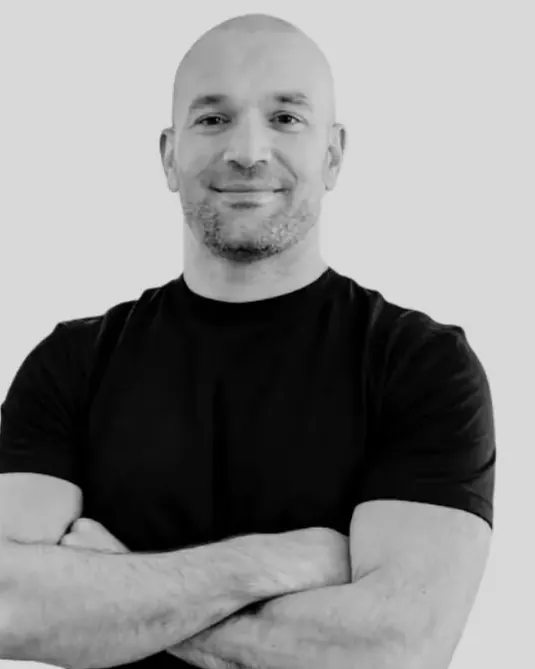
Automate the handoff first: Karl Foster
Automate the handoff first by deciding what the software should do, when a person should step in and who owns the result. It starts with a workflow: decide what the system should handle, where a person needs to step in, and who owns the result. Karl Foster’s approach is to automate the legwork without automating away the judgment, relationships, and follow-through that make a gym work.
Key takeaways
- Choose automation around the gym’s business model, not around the novelty of the technology. 4:06
- Define when AI should hand a task back to a person before turning the workflow loose. 7:06
- Give automated recommendations enough business context to avoid optimizing away something members value. 33:46
- Operators still own adoption, follow-through, and the quality of the experience automation creates. 22:23
Start with the business model, not the tool
Automation should fit the kind of gym you actually run rather than force every operator into the same model, according to Foster. A high volume business may want more of the operation automated, while a boutique owner may deliberately preserve more personal interaction. That distinction matters because it turns AI selection into an operating decision.
“It's a tailored approach to our three archetypes.”
Karl Foster, Head of Artificial Intelligence, Sport Alliance · 4:20
For a boutique operator, Foster explained, the practical target is often the work surrounding the member relationship rather than the relationship itself. That could mean surfacing who needs attention instead of making the owner dig through spreadsheets, or handling routine service conversations until human attention becomes appropriate. The point is not maximum automation. Foster described the goal as "trying to enable you to run your gym on autopilot, but in different degrees."
“So we're trying to enable you to run your gym on autopilot, but in different degrees.”
Karl Foster, Head of Artificial Intelligence, Sport Alliance · 8:18
Design the handoff before you automate
The handoff is where Foster’s approach gets especially useful. He said an automated chat can handle member interactions while the operator configures the point at which the conversation returns to a person. That creates a much clearer question for an operator evaluating automation: not simply, "Can AI do this?" but, "Under what conditions should AI stop doing this?" Foster said the system can be configured "to know when it that threshold kicks in to hand over to you."
“And the way you can configure it is to know when it that threshold kicks in to hand over to you,” Foster said, 7:24
Foster also explained how that workflow can work around member behavior. After a first class, for example, technology can flag that someone has not returned and prompt a human to make contact. That changes automation from a replacement for service into a way of directing attention.
The owner can act "without you having to go through Excel sheets and figure out who you need to contact." The machine finds the moment, according to Foster. The operator still decides how to respond.
“Without you having to go through Excel sheets and figure out who you need to contact,” Foster said, 8:06
Keep context in the decision
A workflow can be efficient and still make the wrong call if it ignores context. Foster clarified this with group exercise scheduling, where a class can look weak on the surface yet serve a specific group that attends no other class. Removing it could affect those members. His point is important beyond scheduling: automation needs enough business context to distinguish a clean-looking optimization from a decision that damages something the operator values. 33:46
That is why Foster emphasized decision support rather than blind optimization. Recommendations can incorporate the nuances of a particular gym, giving the operator a better basis for judgment rather than making every decision automatically. "So also trying to add a lot more of that business context to the decisions too," Foster clarified. A useful automation should reduce the work required to understand a situation without pretending that the underlying business tradeoffs disappeared.
“So also trying to add a lot more of that business context to the decisions too,” Foster said, 38:35
Ownership stays with the operator
Buying the technology does not transfer responsibility for the outcome. Implementing AI is a change management program, especially when a larger organization needs staff to adopt new ways of working, according to Foster. Leadership has to commit to the direction and explain why the change matters.
The harder work is organizational, not merely technical. "the technology part's really the easy part" in the current environment, according to Foster.
“And actually, in today's age, the technology part's really the easy part, especially with AI and engineering and stuff,” Foster said, 22:40
Training alone will not solve that problem. Foster added people can return to familiar tools when new processes are not reinforced, citing an organization where staff went back to spreadsheets after the initial change effort. That makes follow-through part of the automation itself. "It's not just training, it's also making sure you follow up on that," Foster stated. An operator has to keep the workflow alive after launch, not assume adoption happens because software exists.
Automate legwork, preserve the human work
Foster said the larger purpose is to free operators for the parts of the business where they contribute most, particularly interaction, programming, and community in a boutique setting. His framing gives owners a practical filter for automation: look first for repetitive legwork that consumes capacity without requiring the distinctive human contribution you want members to experience. The outcome should be more room for the important work, not automation simply for its own sake. 20:10
There is also a clear boundary in Foster’s view. He said data and technology should not get in the way of personal human interactions, even as operators use them to improve tracking, communication, and other workflows. That completes the responsibility loop: choose the work worth automating, build the human handoff, add the right context, and then own adoption. The technology can carry more of the legwork, but the operator remains responsible for how the system shapes the member experience. 46:05
Explore the Tech and AI topic hub for more source-backed conversations.
Listen to the full conversation
Karl Foster (Sport Alliance Head of AI) on Running Your Gym on Autopilot with AI
Play the episodeFrequently asked questions
How should a gym owner choose what to automate first?
Start with work that consumes time around the core member experience. Foster spelled out that, particularly for boutique operators, automation can take on legwork while freeing the owner for interactions, programming, and community. That makes repetitive operational work a more useful starting point than choosing technology simply because it is available. 20:10
Should AI handle every member interaction automatically?
No. Operators can configure a threshold where automated chat hands the interaction back to a person, Foster said. That means workflow design should include an escalation point from the beginning. The operator decides which interactions can stay automated and which moments deserve direct human attention. 7:06
Why does business context matter in gym automation?
A class can appear weak while still serving members who attend no other class, Foster said. Removing it based only on surface performance could lose those members. Automation therefore needs to account for the nuances behind the data instead of treating every apparent inefficiency as something to eliminate. 33:46
Who is responsible when a gym adopts AI automation?
The operator remains responsible for making the change work. Foster added that implementation requires organizational commitment, training, and continued follow-up. His example of staff returning to spreadsheets shows why installing a system is not enough. Leadership still has to reinforce the workflow so people actually use it as intended. 24:23
Related insights
Quotes are lightly edited for clarity.