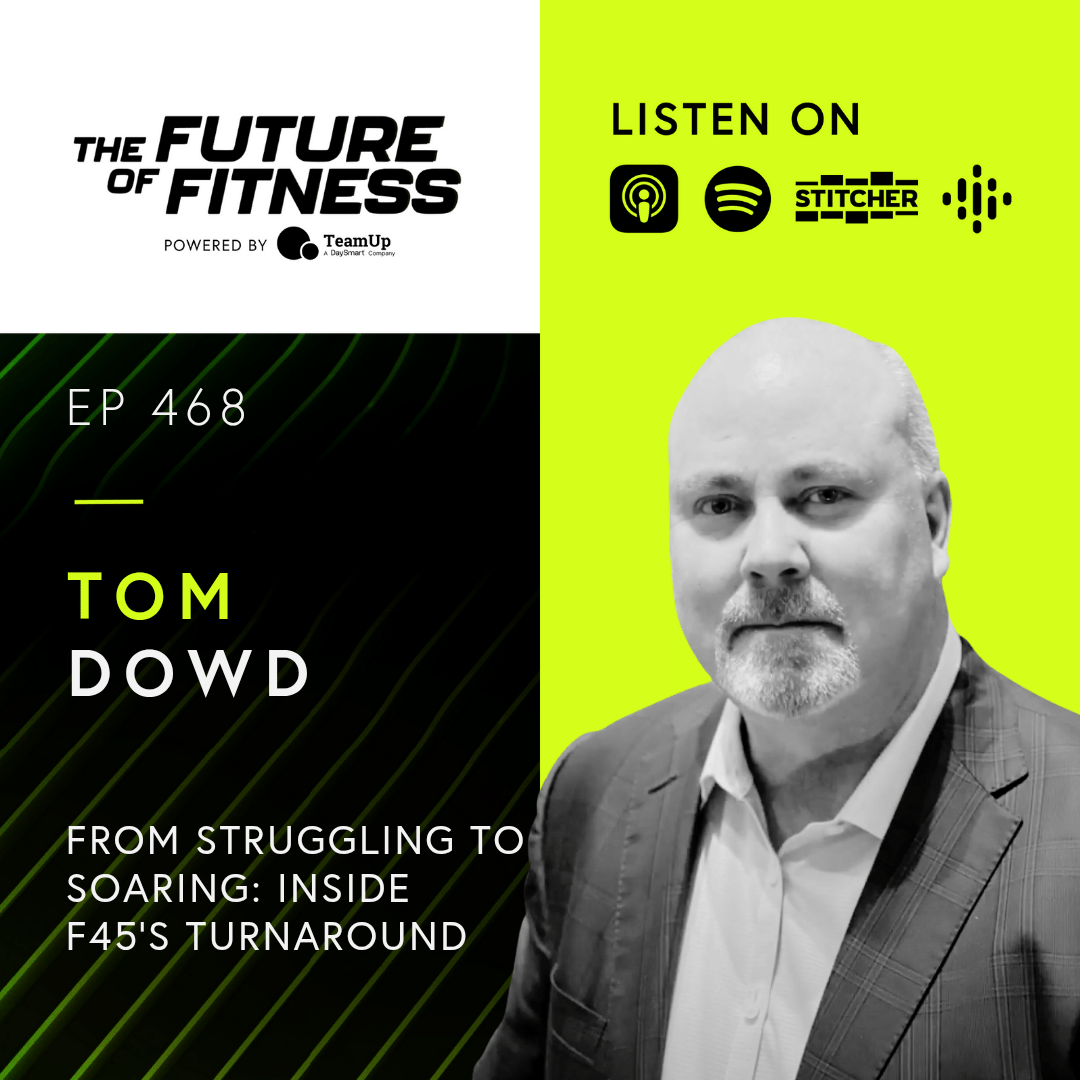
In the fast-evolving fitness franchise industry, few turnaround stories are as impressive as what Tom Dowd has accomplished at F45 Training. Over the past 18 months, the CEO of what is now Fit House of Brands has engineered a remarkable transformation, pivoting from crisis to record-setting growth across multiple concepts. I recently had the opportunity to sit down with Tom for an in-depth conversation about this journey, his strategic vision, and what's next for the company.
From Crisis to Comeback: The F45 Turnaround Story
When Tom Dowd stepped into the CEO role at F45 Training in late 2022, the company was facing significant challenges. As a long-time investor in the brand, Dowd had watched from the sidelines as management issues threatened the franchise system's stability and growth potential.
"We really exceeded expectations," Dowd explained when reflecting on the past year and a half. "I was always optimistic. Obviously, I wouldn't have jumped in if I didn't absolutely love the brand."
What many outsiders didn't realize was that the core product had always been strong - it was execution and management that needed fixing. By shifting from what Dowd described as a "sell and forget model" to a comprehensive support system for franchisees, the company began showing impressive results almost immediately.
The numbers speak for themselves:
75 new studios opened across three brands
12.4% growth in global average unit volumes for F45 Training
23.9% growth for FS8 (their functional Pilates concept)
An astounding 51.1% growth for Vaura Pilates (their premium Pilates brand)
The Franchisee-First Revolution
At the heart of Dowd's turnaround strategy was a fundamental shift in how the company approached its relationship with franchisees. Rather than focusing primarily on selling new locations, the leadership team reoriented around existing franchisee success and profitability.
"The first thing was giving them a voice, listening and getting involved with them," Dowd said. "We flipped that model into a support model."
This approach required genuine engagement and communication - with Dowd himself spending "hours a week engaging with franchisees" to rebuild trust that had been damaged under previous leadership.
The philosophy is straightforward but powerful: "We'd rather have less franchisees with more profitable studios than more locations that are less profitable," Dowd emphasized. This focus on unit economics over location count has become a guiding principle for the company's growth strategy.
The Evolution to Fit House of Brands
One of the most significant strategic shifts has been the expansion beyond the core F45 concept. While F45 Training remains the company's foundation, Dowd recognized the opportunity to diversify the portfolio and create new revenue streams for franchisees.
This expansion led to the recent corporate rebranding from F45 Training, Inc. to Fit House of Brands - a change that better reflects the company's evolution into a multi-concept fitness conglomerate. The current brand portfolio includes:
F45 Training - The core high-intensity functional training concept
FS8 - A fusion of Pilates, yoga, and tone training described as their "workhorse" Pilates brand
Vora Pilates - A premium, high-energy Pilates experience with studios exceeding $1M in annual revenue
ION (launching soon) - A recovery concept featuring cold plunge, sauna, percussion therapy, and red light technology
"For me, it was about telling the world, 'Hey, we're not just F45 anymore,'" Dowd explained. "We absolutely love that business and that's continuing to grow and do well and that's never going to go away. But also we have these other businesses that are extremely popular and growing."
The Mid-Box Strategy: Reimagining the Fitness Footprint
Perhaps the most innovative aspect of Dowd's vision is what he calls the "mid-box strategy" - evolving from traditional 2,000 sq ft single-concept studios to 4,500 sq ft multi-concept locations.
This approach combines F45 Training with either FS8 or Vora Pilates, plus the upcoming ION recovery concept, all under one roof. The benefits are multiple:
Better cost per square foot and operational efficiency
Improved visibility and negotiating power with landlords
Enhanced cross-pollination between concepts (estimated 10-15% of members using multiple modalities)
Multiple revenue streams for franchisees within a single real estate footprint
"It gives you more speaking points from a marketing standpoint," Dowd explained. "We think that that's a big powerful move for us as a brand."
This format serves as a middle ground between boutique studios and big-box gyms - delivering specialized, high-quality fitness experiences while leveraging the economies of scale typically reserved for larger facilities.
Strategic Partnerships and Growth Initiatives
Beyond concept development, Fit House of Brands has pursued strategic partnerships to position itself at the intersection of fitness and wellness. Notable collaborations include:
Dr. B - A partnership addressing the GLP-1 medication market, focusing on muscle preservation and fitness support for those using weight loss medications
High Rocks - Expanding adventure fitness offerings
Spartan Race - Aligning with the popular obstacle course race series
Samsung - Technology integration initiatives
The company's approach to the GLP-1 phenomenon is particularly noteworthy. Rather than resisting this trend, Dowd has positioned the brands to embrace and support the estimated 9% of Americans currently using these medications.
"We're not encouraging it," Dowd clarified. "We know people are taking it now. We know that there's a muscle loss issue, and we want to be there for them to help create muscle mass by working out with us."
Navigating Economic Headwinds with Confidence
Despite current economic uncertainties, including potential tariff impacts on fitness equipment manufacturing, Dowd remains optimistic about the industry's resilience and his company's positioning.
"Health wellness is never gonna go away. Quality of life improvements never gonna stop," Dowd emphasized. "People always wanna, you know, not only live longer, but have better quality of life."
His perspective on economic challenges affecting the fitness industry is particularly insightful: "We want to be that solution headquarters for people that are feeling the pain, who will find the money to spend it on their health."
The Future Outlook: Continued Innovation and Expansion
Looking ahead, Fit House of Brands has additional concepts in development, including a heated workout environment focused on yoga and Pilates. The company continues to iterate on its successful multi-brand strategy while focusing on what Dowd calls "proper growth" - thoughtful expansion that prioritizes franchisee success over pure location count.
The fitness industry has seen numerous trends come and go, but Dowd's approach - combining operational excellence with strategic diversification and genuine franchisee support - provides a blueprint for sustainable growth that other fitness brands would do well to study.
Key Takeaways for Fitness Industry Professionals
For fitness entrepreneurs, franchise operators, and industry investors, the Fit House of Brands transformation offers several valuable lessons:
Prioritize operator success over system growth - Building a foundation of profitable, successful locations creates a more sustainable franchise system than rapid, unstable expansion.
Create multiple revenue streams within existing footprints - The mid-box strategy demonstrates how complementary fitness concepts can enhance unit economics.
Embrace rather than resist health trends - Whether it's GLP-1 medications or recovery therapy, positioning your business to support evolving consumer health journeys creates new opportunities.
Rebuild trust through consistent communication - Dowd's hands-on approach to franchisee relationships shows how leadership engagement can transform a struggling system.
Focus on proper growth over location count - As Dowd emphasized, "We'd rather have less franchisees with more profitable studios than more locations that are less profitable."
In an industry often chasing the next trend, Tom Dowd's leadership at Fit House of Brands reminds us that execution, operational excellence, and franchisee support remain the fundamental drivers of long-term success in fitness franchising.
For more insights from fitness industry leaders, subscribe to the Future of Fitness podcast, where we explore the trends, technologies, and strategies shaping the evolution of fitness and wellness.